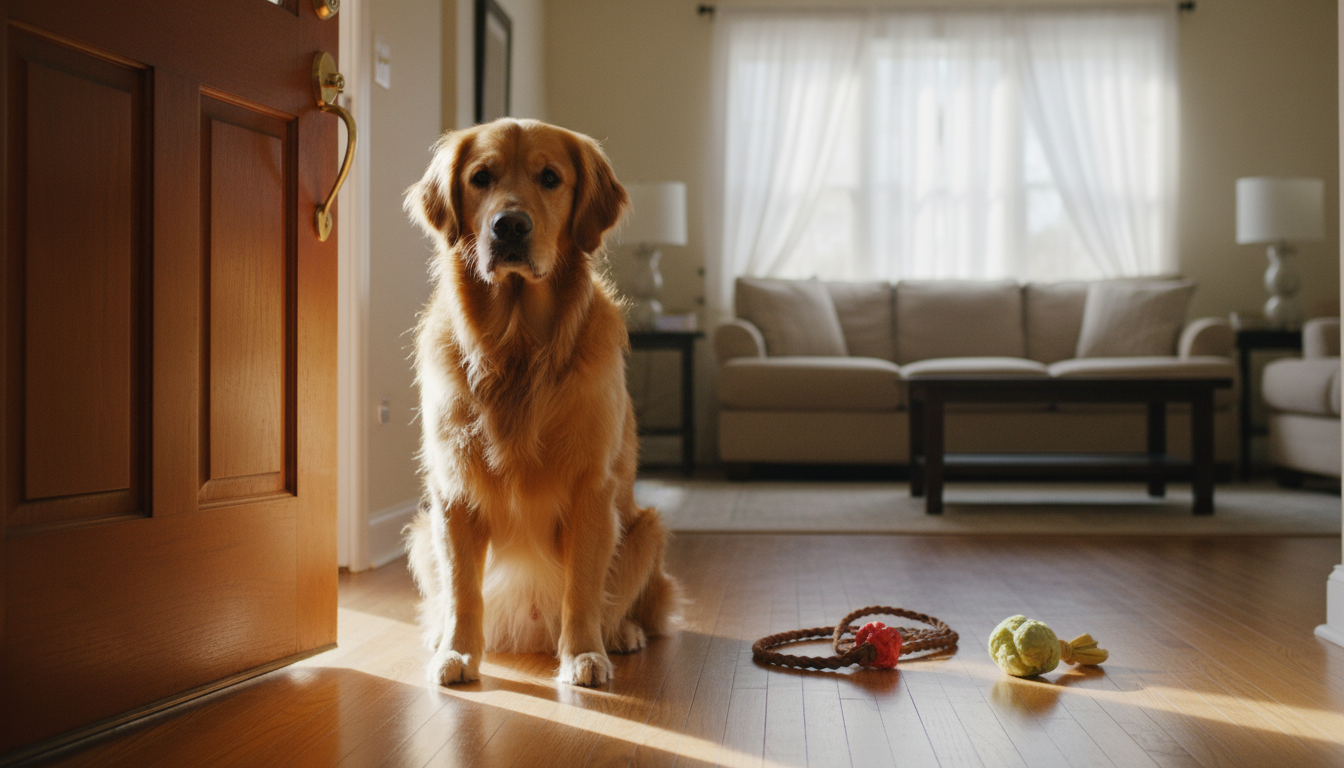
Sarah used to dread her morning drive. Her Labrador would howl and chew the couch within minutes of the car backing out.
Research shows 8 out of 10 pets struggle when left alone. Many signs start within 30 minutes of an owner’s absence.
If your dog pans and paces or barks, that behavior signals stress. Identifying the root helps you pick the right treatment for your canine companion.
Simple changes—short training sessions, tasty treats, safe toys, and predictable routines—can make a big difference. With steady practice, most owners find their pet becomes less anxious over time.
Make sure you watch for damage, loud barking, or constant pacing. These are clear examples that dog separation needs attention. Small steps now protect your pet’s health and keep your house calm.
Key Takeaways
- About 8 of 10 pets show trouble when left alone, so early action matters.
- Signs often appear within 30 minutes of an owner’s absence.
- Look for pacing, barking, or destruction as clear warning signs.
- Short training, toys, and treats can reduce stress for your dog.
- Identify the root behavior to choose the right treatment for your canine.
Understanding Separation Anxiety in Dogs
Many pet owners see signs of extreme clinginess and distress when they step out the door.
Separation anxiety describes a dog that becomes overly attached or dependent on family members. These pets may panic in a dog alone state and show clear distress.
Common behaviors include loud vocalization, chewing or other destruction, and house soiling. Another classic sign is a dog that follows an owner from room to room.
These problems often come from deep attachment or a sudden routine change, like a move or a new schedule. Any breed can suffer if it lacks independence.
- Hyper-attachment leads to extreme distress when left.
- Destructive behavior and vocalization are coping signs.
- Consult a professional for the right treatment for your canine.
| Sign | What it Looks Like | Possible Trigger |
|---|---|---|
| Vocalization | Continuous barking or howling after departure | Separation from owner or cue of leaving |
| Destruction | Chewed furniture, torn cushions | Stress from being left alone |
| House soiling | Urine or feces inside despite training | Acute anxiety during owner absence |
Recognizing the Signs of Distress
A quiet room can mask loud distress signals from your canine companion. You need to spot both obvious actions and subtle physical cues. Early detection helps your pet get the right help fast.
Common Behavioral Indicators
Watch for loud vocalizing, frantic pacing, or door-focused destruction. Howling, persistent barking, or scratching at an exit are classic signs that a dog struggles when left alone in a room.
If a usually house-trained pet has accidents, treat that as a red flag. Owners often miss these behaviors because the dog may seem fine while someone is present.
Hidden Physical Symptoms
Some problems show in the body rather than behavior. Trembling, heavy panting, and excessive drooling can mean extreme stress.
Self-injury like paw licking or chewing may be an outlet for tension. Use a camera to watch your pet when you are away—many dogs reveal their true condition only during that time.
| Symptom | What to Look For | Why It Matters |
|---|---|---|
| Vocalization | Howling or nonstop barking after departure | Signals acute stress and distress linked to dog separation |
| Destruction | Chewed doors, torn cushions near exits | Shows panic and can be dangerous for the pet |
| Physical signs | Trembling, panting, drooling, paw licking | Often missed; indicates high anxiety and possible pain |
| House soiling | Accidents despite training | Major sign owners should address quickly with a vet or trainer |
- Document each sign and the time it occurs; patterns help a vet diagnose problems.
- Early recognition gives your dog the best chance at recovery and comfort.
How to Stop Separation Anxiety in Dogs When You Leave Home
Small, consistent steps make big changes in a pet that struggles with being left alone. Start by teaching calm cues with short absences. Practice exits that last just minutes, then build time slowly.
Use a high-value toy stuffed with food, such as a Kong, to reward steady behavior. Let your dog try the filled toy while you are present. That way the item becomes a positive signal for absences.
Plan each departure. Make sure your dog is fed or given a chew before you go, and create a safe space with familiar bedding and toys. If you dash out without prep, behavior problems can spike.
“Patience and routine are the core treatment for dogs that panic during absences.”
Consistent training and gentle management are what help dog stress over time. Owners who repeat short practice sessions and use engaging toys often see fewer problems and calmer returns.
Creating a Predictable Daily Routine
A steady daily rhythm can calm a restless pet and cut down on surprise behaviors. Set clear times for walks, meals, and short training sessions so your dog learns what comes next.
Consistency helps a pet know when to expect attention and when quiet is normal. That clarity reduces overall anxiety and lowers problem episodes during work hours.
Establishing Predictable Patterns
Schedule exercise first thing or before long absences. A tired dog settles more easily and rests while you work.
Feed at regular times and pair meals with a safe chew or puzzle. This links food with calm, silent periods.
- Teach your dog to use a mat or a separate room for quiet time.
- Practice short training cues that ask for calm settling on command.
- Rotate toys and puzzles so mental play stays engaging.
Many owners find problems drop when a pet knows the day’s flow. Predictable routines give both you and the dog a dependable pattern.
| Routine Element | Recommended Timing | Benefit |
|---|---|---|
| Exercise | Morning or pre-work (20–60 min) | Reduces excess energy and promotes nap time |
| Feeding | Same times daily | Creates comfort and signals rest periods |
| Training/Quiet Practice | Short sessions, several times daily | Builds independence and settle-on-command skill |
| Mental Games/Toys | Rotate daily, use at departures | Prevents boredom and extends calm |
“A reliable schedule teaches a pet that departures are normal parts of the day.”
For crate-minded pets, consider a guide on safe and comfortable crates as part of your routine plan.
Environmental Enrichment and Safe Spaces
A well-designed space can make alone time feel safe and even enjoyable for your pet.
Environmental enrichment is a vital part of treatment for dogs that struggle with separation anxiety. Create a dedicated room or crate where your dog can nap, chew, and relax. Make sure the area has a comfy bed and familiar items.
Use a radio or TV on low volume to muffle outside noises. This small cue reduces barking and other anxiety-related behavior. Puzzle toys stuffed with food will keep your dog busy and reward calm habits.
- Choose a secure room or crate with favorite toys and bedding.
- Rotate puzzle feeders and chew toys to prevent boredom.
- Train your dog to enjoy the space with short, positive sessions.
“A safe space gives a pet control and comfort during brief absences.”
| Element | Why It Helps | Quick Tip |
|---|---|---|
| Comfortable bed or crate | Provides a secure retreat and lowers stress | Introduce gradually with treats and short stays |
| Audible cues (radio/TV) | Masks triggers from outside and soothes | Use low, steady volume and calming stations |
| Puzzle toys with food | Distracts and rewards calm behavior | Fill toys before departures for added value |
| Familiar scents and items | Signals safety and reduces novelty stress | Keep a worn item of the owner’s clothing nearby |
Desensitization and Counterconditioning Techniques
Start by making departure cues ordinary items, not a trigger for panic.
Desensitization means showing keys, shoes, or a coat without leaving. Repeat this until cues feel neutral.
Gradual Exposure to Departure Cues
Make cues boring. Pick one item and act like nothing is happening. Praise calm interest and offer a favorite toy as a reward.
Do short, calm repetitions. Keep sessions brief and upbeat so your dog learns safety, not alarm.
Building Time Apart
Start with seconds, not minutes. Leave the room for a few breaths, then return calmly. Increase time slowly as calm behavior grows.
If your pet shows stress, shorten the step and practice more at that level. Consistent, small gains are the best treatment.
Avoiding Punishment
Never punish damage or accidents. Punishment raises fear and makes problems worse.
Reward calm behavior with praise or a stuffed toy. Be patient—owners who use positive training see the most success.
“Small, steady practice teaches your canine that absences are safe and predictable.”
- Desensitization uses neutral cues.
- Build apart time slowly and reward calm.
- Avoid punishment; reinforce positive behavior with toys.
Managing Your Departures and Returns
Low-key exits and quiet returns cut the drama around leaving for work. Keep comings and goings calm so a dog learns that absences are routine, not alarms.
Avoid long goodbyes. Ignore excited behavior for the first 10–15 minutes after you return. This teaches calm greeting and reduces loud barking and destructive actions.
Before an exit, occupy your pet with a food puzzle or chew. A filled toy gives a pleasant association with your absence and buys minutes of quiet.
If problems persist, consider a sitter, dog walker, or professional treatment that may include medications under veterinary guidance. Owners often combine behavior training with medical help for best results.
- Keep departures low-key to limit cues that trigger anxiety.
- Ignore overly eager greetings for about 10–15 minutes after coming back.
- Offer a puzzle feeder or frozen treat before leaving the room.
“Consistent, calm management of daily absences helps your canine become more independent and less reliant on constant presence.”
| Action | Why it Helps | Quick Tip |
|---|---|---|
| Low-key exits | Reduces cue-driven panic | Skip long goodbyes |
| Calm returns | Discourages attention-seeking | Wait 10–15 minutes before petting |
| Pre-departure food | Occupies and soothes | Use a safe puzzle toy |
The Role of Exercise and Mental Stimulation
A regular mix of walks and brain games helps a restless dog settle during absent periods. Give your pet solid play and a good walk before you leave. A tired, happy dog is far more likely to rest calmly while alone.
Mental Games and Puzzle Toys
Mental play boosts focus and reduces destructive behavior problems. Use puzzle feeders filled with food or treats so your canine stays busy and rewarded.
Rotate interactive toys and hide small treats in games. This keeps novelty high and gives your dog a reason to enjoy quiet time. High-value treats work best when you teach your pet to use a new toy.
Consistent activity and short training sessions make calm behavior the norm. Owners who pair exercise, mental play, and light training often see big gains in treatment of separation anxiety.
“A tired mind leads to a quiet body.”
- Provide daily exercise as part of treatment.
- Use puzzle toys and high-value treats to reward focus.
- Keep sessions short and regular to prevent problems from returning.
When to Seek Professional Veterinary Assistance
When basic training and enrichment fail, a clinical checkup can reveal unseen issues.
If your dog keeps showing signs of distress, talk with a veterinarian. A health exam rules out infections, hormone imbalances, or other causes that can mimic behavior problems.
If behavior modification does not ease the problem, your vet may discuss medications. These drugs can lower stress and make training more effective for severe cases of dog separation anxiety.
Make sure you work with a professional who understands canine behavior and anxiety dogs. A combined plan from a vet and a qualified trainer offers the best path forward.
“Addressing health first gives your pet the best chance for lasting progress.”
- Request a full health check to rule out medical causes of accidents.
- Ask if medications could help while you continue training.
- Seek a personalized plan for absences that fits your schedule and house routine.
Don’t hesitate—owners who get timely help often see faster improvement and better long-term health for their dog.
Conclusion
Recovery takes steady effort and small wins, not quick fixes. A strong, steady commitment from an owner makes the biggest difference.
Be patient and consistent. Create a calm routine, add mental play, and give a safe space so your pet feels secure when left alone.
If problems persist, seek professional help. Vets and trainers can offer a plan that blends behavior work with medical support.
Most owners find that steady care and small changes lower anxiety over time. Your dedication is the key to helping your dog feel safe and happy at home.