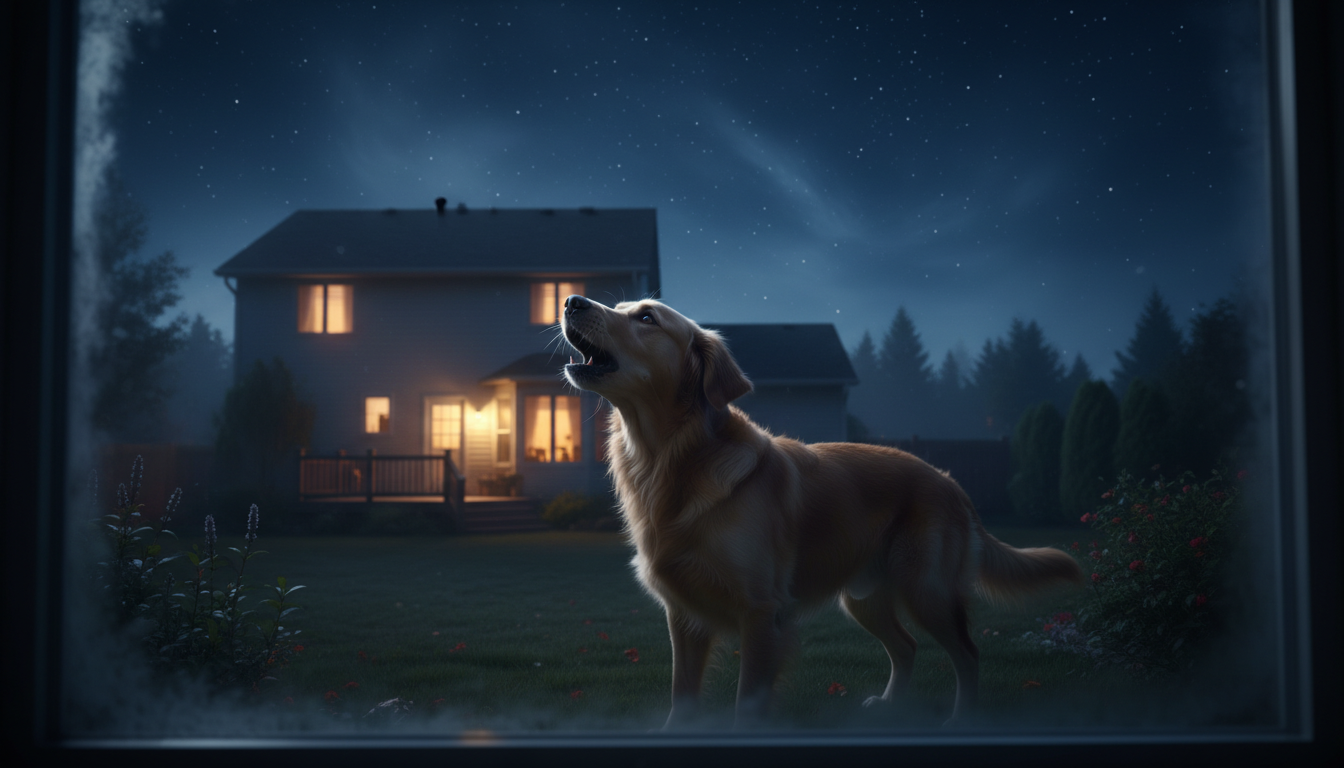
Late one evening, you hear a familiar series of yips from the yard. A neighbor leans over the fence, puzzled. Your pup seems on alert, yet nothing seems nearby.
That small scene is common in many homes. Dogs may vocalize when they sense a stray noise, react to anxiety, or seek attention. Learning the root cause helps you restore calm and improve health and behavior.
Start by watching patterns: note the time, triggers, and how often the bark occurs. Patience matters. A steady plan that blends training, environment changes, and vet checks often works best.
Key Takeaways
- Track when the sound happens to spot triggers.
- Address anxiety and rule out health problems first.
- Create a quiet, secure home routine at night.
- Use consistent training as a long-term way to reduce noise.
- Consult a vet or trainer if the problem persists.
Understanding Why Your Dog Barks at Night
Sudden nighttime noise from your companion can feel inexplicable—but it’s normal.
Every owner has sat in a quiet room when their pet starts vocalizing without an obvious cause. Dogs perceive the world in a different way than humans. Their hearing, smell, and motion detection pick up tiny cues we miss.
Certain breeds tend to be more vocal. Some pups alert at distant animals, passing cars, or creaks in the house. Other times a change in routine or a new sound will trigger repeated calls.
- Track the time and what happens just before the sound.
- Note which room your pet uses and any nearby triggers.
- Observe patterns for several nights to spot consistent causes.
Accepting that responses are sensory helps you act calmly. With careful observation and targeted steps, you can reduce late‑hour interruptions and improve sleep for everyone.
The Sensory World of Dogs
What sounds like silence to you can be a busy landscape for your companion.
Superior Hearing Capabilities
Dogs hear much higher pitches and quieter rustles than humans. Their ears pick up distant footsteps, small animals, and faint mechanical sounds that you might miss.
This sharp hearing explains why barking can start without any obvious trigger to you. Different breeds show different sensitivity, so some dogs react more often.
Vision in Low Light Conditions
The tapetum lucidum, a reflective layer behind the retina, lets a dog see with far less light than humans need.
They also have many rods in the retina, which helps them detect small movements in dim settings. What looks dark to you may be clear to your pet.
The Power of the Canine Sense of Smell
The canine nose is a world of information. A Jacobson’s organ detects pheromones and subtle cues that guide behavior.
While humans rely on sight, dogs experience a lot through scent. That strong sense helps explain barking when you see nothing nearby.
- Dogs use hearing, vision, and smell together to monitor their world.
- This bundle of senses makes them alert guardians, always checking for change.
Common Reasons for Nighttime Barking
When the house goes quiet, a few common triggers can set a dog off.
Territorial instincts make many dogs alert after dark. They guard the home and family, so a rustle or distant footstep can prompt loud responses.
Separation anxiety shows as pacing, whining, or destructive behaviors. If the pet seems distressed when alone, this sign often points to separation as the root cause.
Low daytime activity can create extra energy. Dogs that lack exercise or mental work may use barking as a way to burn time or get attention.
- Responses to neighborhood animals, like a cat or raccoon, are normal alarm calls.
- Some breeds show high arousal and will vocalize when excited or overstimulated.
- Attention‑seeking behavior teaches dogs that noise brings humans running.
Tip: track sounds, times, and behaviors. Identifying the specific trigger helps you address the real reason and reduce late‑night noise.
Why Is My Dog Barking at Nothing at Night and How to Stop It
Nighttime noise can feel mysterious when your companion reacts to subtle cues you can’t detect.
Acknowledge the message. Often a pup communicates a perceived need or threat. Start by treating the sound as meaningful and note timing and context.
Use simple training that teaches a clear quiet cue. When the barking stops even briefly, mark the moment with a word or a click.
Reward silence immediately with high‑value treats or a small chew. This links calm behavior with a better outcome than making noise.
Stay calm. If you shout, your response may act like joining the alarm and increase the behavior.
- Ignore attention-driven barking until your dog is quiet.
- Then give praise and a tasty treat to reinforce calm.
- Practice the cue regularly at the same time each night for consistent results.
“Patience and small rewards beat yelling every time.”
| Action | When to Use | Expected Result |
|---|---|---|
| Teach quiet cue | During controlled practice | Dog learns silence = reward |
| Use marker or clicker | At the exact stop of bark | Clear timing for behavior |
| Ignore attention barks | When barking seeks notice | Reduces attention-seeking over time |
| Reward with treats | Immediately after quiet | Reinforces calm habit |
Ruling Out Medical Concerns
Sometimes health problems show up as increased night vocal activity rather than obvious pain during the day.
Start with a vet visit. Before treating this as purely a behavior issue, have a professional check for illness or injury. A physical exam can catch problems that cause restlessness or vocal signals.
Older pets often show cognitive decline. Confusion in seniors can lead to more calls during quiet hours.
If your companion has chronic pain, extra vocalizing may be their way of saying they are uncomfortable. That pain can stop them from settling down.
Identifying Signs of Pain or Cognitive Issues
- Watch for changes in sleep, appetite, or activity—each can be a sign of a health problem.
- Notice sudden shifts in vocal habits; these often prompt urgent evaluation.
- Separation and anxiety can overlap with medical issues and may need targeted treatment.
“Early veterinary checks help you rule out illness so you can focus on training with confidence.”
Environmental Adjustments for a Quieter Home
A few simple shifts in your living space often make evenings calmer for everyone.
Start with the room setup. A cozy bed, dim lighting, and fewer sights out the window help reduce alert behavior. Consistent routines during the day also cut late‑hour restlessness.
Using White Noise to Mask Sounds
A white noise machine or a low fan masks distant sounds that trigger dogs. This muffling keeps small noises from escalating into long calls.
- Place the machine near the sleeping area but not directly on bedding.
- Choose a steady, gentle setting rather than fluctuating tones.
- Combine with a secure crate or bed for added comfort.
Implementing Pheromone Diffusers for Calm
Pheromone diffusers release calming signals that reduce anxiety and alert responses. Many owners find them helpful alongside other changes.
- Block sightlines to neighborhood animals, like a cat, with curtains or film.
- Keep daily walks and play in the day so your pup is tired by bedtime.
- Use calming aids, quiet routines, and rewards like treats for relaxed nights.
“Manage the environment and you make training work faster.”
Teaching the Quiet Cue
With a consistent quiet cue, evenings become more peaceful for everyone in the home.
Wait for the pause. When your dog stops mid‑bark, mark the silence and give a high‑value treat right away. This links calm with reward in a clear way.
Practice the session by creating a controlled trigger, such as a gentle knock on the door. Let the bark happen, then wait for a stop. Reward within a second.
It usually takes about 10 to 20 attempts before your pup starts to connect the cue with the reward. Keep sessions short and positive so your companion stays engaged.
Use a favorite toy as a distraction if needed. A brief toss or chew can lure quiet and make the treat easier to give. Be sure every household member uses the same quiet cue each time.
- Increase the silence requirement slowly — add a few seconds before giving the treat.
- Practice in different rooms and at different times to generalize the behavior.
- Keep up daily exercise and mental work so the training works faster.
“A short, consistent routine beats long, inconsistent correction.”
| Step | How to Do It | Result |
|---|---|---|
| Trigger and wait | Knock lightly, let the bark occur, wait for pause | Dog learns silence is noticed |
| Marker + treat | Mark the stop, give high‑value treat immediately | Clear reward timing for behavior |
| Use toy | Distract briefly to encourage calm | Quieter responses with less stress |
| Generalize | Train in living room, hallway, night sessions | Quiet cue works across home and times |
Using Positive Reinforcement to Change Behavior
When you reward silence, you build a clear choice for calm behavior.
Positive reinforcement focuses on rewarding the actions you want. Give a treat or a favorite toy the moment your dog stays quiet. This link makes silence more valuable than noise.
Keep training sessions short and frequent. Aim for success most of the time—about eight wins out of ten. That ratio keeps your pup confident and motivated.
Rewarding Silence with Treats and Toys
- Mark the pause, then give high‑value treats—this strengthens calm behavior.
- Swap treats for a toy when you want longer quiet; toys help redirect attention.
- Add regular exercise and mental work so your pet has less excess energy.
- If separation anxiety shows, use slow desensitization with rewards to build security.
“Consistent, calm rewards beat loud corrections every time.”
Conclusion
Small, consistent actions make a big difference in evening peace and sleep for both of you.
Understand the cause and rule out any health concern with a vet visit early on. That gives you a clear starting point for training and environment changes.
Use steady positive reinforcement and a simple quiet cue each night. Pair rewards with calm routines so quiet becomes the preferred choice.
Be patient. With time, clear signals, and gentle practice, your dog will settle more easily and your household will enjoy quieter, more restful nights together.