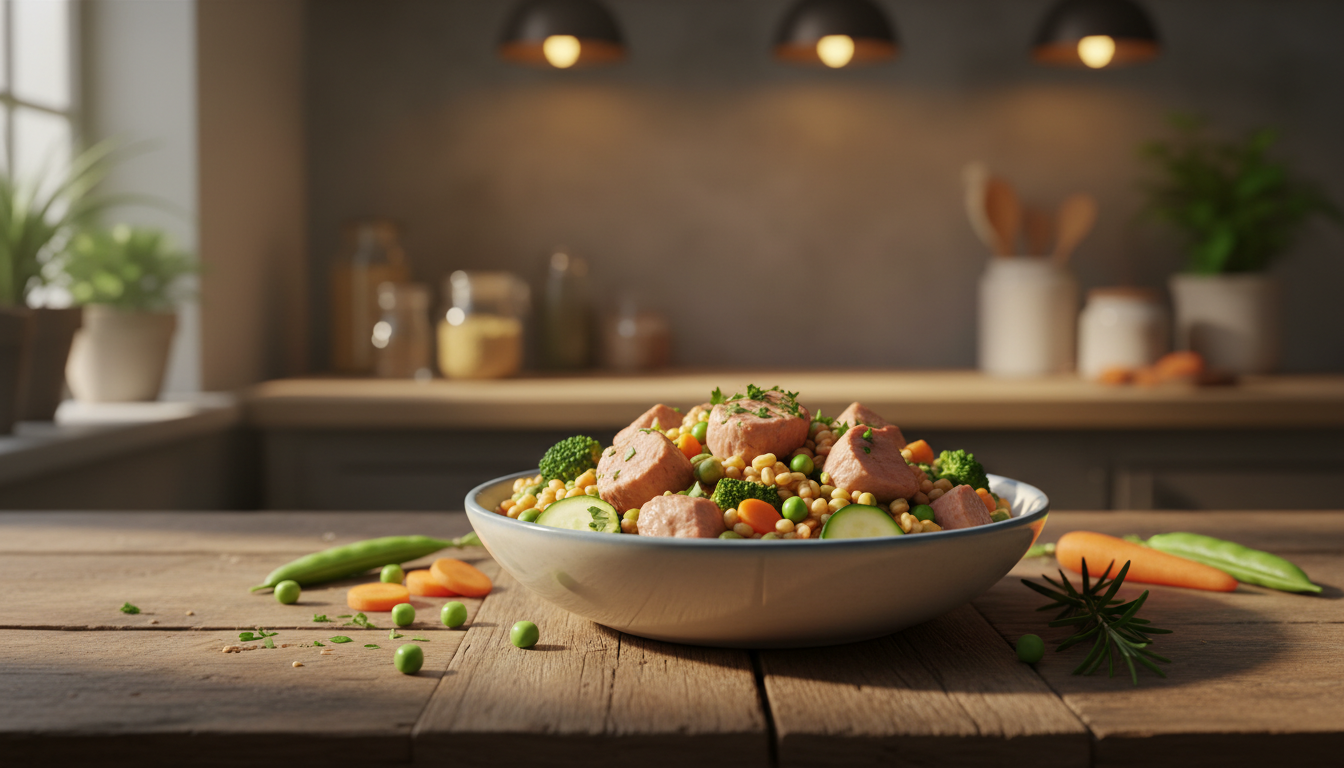
It started on a rainy Tuesday. Your pup refused his usual bowl and hunched by the door. That small change sent you searching for answers about tummy troubles and nutrition.
You learn fast that gentle meals and clear ingredients matter. A quick call to your vet rules out urgent issues, and you start tracking symptoms, treats, and feeding times.
Recent AAFCO guidance from 2023 made it easier to spot human-grade labeling on dog food, so you can choose quality sources with more confidence. Over time, you find that simple swaps in ingredients and predictable portions cut down on digestion problems.
This guide will walk you through practical steps to spot signs, test recipes like beef or chicken options, and monitor reactions. You’ll read about nutrients, quality ingredient sources, and how small changes save time and stress in your pup’s life.
Key Takeaways
- Check symptoms early and consult your vet for vomiting or diarrhea.
- Look for clear ingredient lists and human-grade labels per AAFCO 2023.
- Track meals, treats, and reaction time to pinpoint triggers.
- Simple ingredient swaps can improve digestion and nutrition.
- Consistent monitoring helps you find the right long-term food options.
Understanding Your Dog’s Digestive System
Start by picturing how your dog’s gut handles a meal differently than yours. The canine digestive system uses a more acidic dog stomach and moves food faster than humans. That speed helps break down meat but can stress the gut when foods change suddenly.
How the Canine Gut Works
How the Canine Gut Works
The stomach’s acidity and quick transit are normal. Enzymes and acids begin digestion, then the small intestine absorbs nutrients. If your dog sensitive to certain proteins, nutrient uptake becomes harder and the gut works overtime.
The Importance of Microbiome Health
The Importance of Microbiome Health
About 70% of your dog’s immune cells live in the gut, where bacteria help regulate antibody production. A balanced microbiome supports digestion, immune response, and even mood through neurotransmitters.
If you watch food choices and consistent feeding, you support digestive health and lower the risk of long-term digestive issues.
Common Signs of Tummy Troubles
A sudden change in appetite or odd behavior can be the first clue that your pup’s tummy is struggling.
Watch for clear symptoms:
- Frequent vomiting or diarrhea — these are immediate red flags that need a vet visit.
- Loose stools and excessive gas — common signals that the current food may not agree with your dog.
- Lack of appetite, pacing, or whining — signs of abdominal discomfort tied to sensitive stomachs and tummy troubles.
Track each episode: note the time, what your pet ate, and any treats or new foods. This record helps your vet spot patterns quickly.
Why early action matters: Persistent symptoms can cause dehydration and other health issues. Whether your dog is a puppy or a senior, catching signs early lets you adjust foods or seek medical care and improve overall health.
Identifying Potential Causes of Digestive Issues
When your dog’s stool changes, the cause may hide in everyday foods or the environment.
Common Food Intolerances
Many pups react to proteins or grains. Common triggers include beef, dairy, chicken, and wheat. These foods can cause loose stools, vomiting, or recurring tummy troubles.
Start by noting every meal and treat. A simple log helps you spot patterns fast. If one protein repeats before symptoms, that ingredient is a prime suspect.
Environmental and Stress Factors
Stress can show up as physical symptoms. Separation anxiety or sudden changes in routine affect digestion and nutrient absorption.
Also check for scavenging. Backyard scraps, human treats, or trash raids often trigger acute digestive issues.
“Record what your pup eats and any changes in behavior — that timeline can lead your vet straight to the cause.”
| Cause | Common Signs | What to do |
|---|---|---|
| Beef, chicken, dairy, wheat | Loose stool, gas, vomiting | Keep a food log; try an elimination approach under vet guidance |
| Stress / anxiety | Pacing, whining, sudden appetite loss | Stabilize routine, add enrichment, consider behavior support |
| Scavenged treats | Sudden diarrhea or vomiting | Prevent access, record incident, monitor hydration |
If symptoms continue, contact your vet. They may recommend an elimination plan or tests to pinpoint the ingredient and protect your pup’s long-term health.
The Best Diet for Dogs with Sensitive Stomachs What to Feed
Pick a formula that keeps ingredients simple and digestion calm.
Choose complete, balanced dog food that supports gut health. Look for brands that list a single, easily digestible protein like chicken or fish near the top of the ingredient panel.
Two widely recommended commercial options are Purina Pro Plan Sensitive Skin & Stomach and Royal Canin Digestive Care. Both aim to reduce common triggers and include tested formulas.
Many owners find that limited ingredient food sensitive plans reduce flare-ups. These reduce the chance of reaction by cutting out fillers and complex blends.
When you try a new food, introduce it slowly and watch stool and appetite. Keep a short log of meals and any issues so you can share clear notes with your vet.
“A simple, steady switch beats abrupt changes when gut trouble is common.”
- Look for feeding trials and clear labels.
- Consult your vet before making long-term switches.
- Consider limited ingredient options if reactions repeat.
Why Quality Ingredients Matter for Gut Health
Choosing whole, clear ingredients makes it easier for your dog’s gut to absorb nutrients.
Look beyond marketing and read labels. Quality matters because poor fillers and hidden fats can spark flare-ups. If a food lists vague sources, it may hide hard-to-digest components.
Evaluating Protein and Fat Content
Lean proteins like chicken or lean beef tend to digest more easily than heavily processed blends. Proteins that are simple and named support steady digestion and better nutrient uptake.
Fat is important, but keep it moderate. Dr. Leilani Alvarez recommends picking foods with fat under 25% to reduce risk of pancreatitis and loose stool. High fat meals can overwhelm a sensitive gut.
Quick checklist:
- Prefer named proteins (chicken, beef) near the top of the list.
- Avoid vague fats and overly rich formulas labeled for extra energy.
- Choose foods with minimal fillers to support long-term gut health.
“Quality ingredients make a measurable difference in digestion and overall health.”
If you’re weighing grain-free options or other trends, read more about the grain-free debate in this guide: grain-free dog food.
How to Safely Transition Your Dog to New Food
Start small: a tiny portion of the new kibble mixed into the old one keeps the gut calm.
Follow the 10-day rule: Begin by mixing 10–20% new food into 80–90% of your dog’s regular meals. Increase the new portion slowly every two to three days until you reach 100%.
Use a chicken or fish-based old food if that is what your pup normally eats. Watch stool, appetite, and energy. Stop or slow the change if you spot loose stool, vomiting, or lethargy.
- Introduce the new food in the morning and evening meals to monitor effects.
- If signs appear, reduce the new food by half and extend the transition by several days.
- Keep a short log of meals, amounts, and symptoms to share with your vet.
“A gradual switch prevents setbacks and protects your dog’s gut during the adjustment.”
| Phase | Old Food (%) | New Food (%) | Duration |
|---|---|---|---|
| Start | 90 | 10 | 2–3 days |
| Middle | 70 | 30 | 3–4 days |
| Almost there | 50 | 50 | 2–3 days |
| Finish | 0 | 100 | Complete |
Benefits of Limited Ingredient Diets
Limiting ingredients narrows the list of suspects when your pup shows recurring gut trouble.
Limited ingredient options cut down on hidden fillers and additives. That makes it easier to spot a trigger when your dog gets loose stool or shows discomfort.
Single-protein recipes—like those that use chicken, duck, or fish—let you test one protein at a time. The Honest Kitchen’s Limited Ingredient Recipes, for example, focus on single proteins to lower the chance of reactions.
Fewer components mean fewer potential allergens. This helps your pet’s gut calm down and supports steady nutrient uptake. It also simplifies conversations with your vet.
Many high-quality dog food brands offer these options as complete formulas. They aim to provide balanced nutrition without unnecessary extras that can upset a sensitive gut.
- Identify triggers faster by testing one protein.
- Reduce allergens and fillers that cause flare-ups.
- Maintain full nutrition while keeping ingredient lists short.
| Focus | Benefit | Example |
|---|---|---|
| Single protein | Easier testing of reactions | Chicken or fish-based recipes |
| Minimal fillers | Lower risk of irritation | Limited ingredient formulas |
| Complete nutrition | Daily health maintained | Veterinarian-approved recipes |
Incorporating Probiotics and Prebiotics
Small daily supplements can make a big difference in digestive comfort.
Probiotics help rebalance the gut. Adding 1.25 billion active probiotics to your dog’s food can calm a sensitive stomach and support digestive health.
The Honest Kitchen’s Instant Goat’s Milk is one example of a daily booster formulated with that level of active cultures. Many owners add a scoop to morning meals to ease loose stool and improve appetite.
Prebiotics feed the good bacteria. Ingredients like Jerusalem artichoke powder nourish helpful microbes so probiotics can thrive.
These supplements are especially useful for puppies and dogs recovering from illness. They speed recovery by restoring natural gut balance.
- Look for products with labeled colony-forming units (CFUs).
- Choose formulas that list clear ingredients and strains.
- Introduce new boosters slowly and watch your pet’s response.
“Consult your vet before adding supplements so you match strains and doses to your dog’s needs.”
When to Consider Homemade Meals
Home meals let you control every ingredient, which helps when reactions are severe or unclear.
A plain bowl of lean chicken and rice can be an effective short-term option when your pup has acute tummy troubles. It is easy to digest and often calms vomiting or loose stool while you track symptoms.
If you choose homemade food long-term, make sure meals meet full nutrition needs. Balance IT, created by board-certified veterinary nutritionist Sean J. Delaney, is a tool that helps you design recipes that hit required nutrients and maintain dog health.
Using a base mix saves time and ensures consistent quality across servings. That approach helps you control ingredients, limit treats that cause flare-ups, and simplify feeding during recovery.
Always consult a vet or nutritionist before you switch permanently. A professional check prevents nutrient gaps and protects long-term digestion and organ health.
“When in doubt, temporary home meals are a calm bridge while you and your vet solve the root cause.”
The Role of Veterinary Prescription Diets
When standard dog food and home fixes fail, a vet may suggest a prescription formula tailored to your pup.
Veterinary prescription diets are made to treat specific health issues that ordinary foods often cannot handle. These formulas use controlled ingredients and precise nutrient levels. That makes them useful when recurring symptoms persist despite careful changes at home.
If your pup continues to show tummy issues, your vet can recommend a prescription food to stabilize digestion. These products are developed by specialists and tested to support dogs with chronic problems or severe food sensitivities.
Prescription options can be an investment, but they often deliver faster, clearer results than trial-and-error swaps. Work closely with your vet while your pet is on a prescribed plan so you track improvements and spot side effects early.
- Targeted nutrition: designed for specific digestive needs.
- Medical oversight: your vet guides selection and monitoring.
- Long-term support: intended for chronic or severe cases.
“A prescription formula can be the turning point when other foods fail.”
Essential Feeding Tips for Sensitive Pups
Consistent mealtimes calm your pup’s gut and make digestion more predictable.
Establishing a Consistent Schedule
Set regular times for morning and evening meals. A steady routine helps the digestive system stay regular and cuts stress-related tummy troubles.
Managing Portion Sizes
Split daily rations into smaller, more frequent meals. Feeding smaller portions more often prevents overeating and improves nutrient absorption.
Use a slow feeder bowl if your pup eats too fast. This reduces gulping air and eases digestion.
Avoiding Human Scraps
Keep table scraps out of reach. High fat foods and rich sauces can trigger severe digestive issues and pancreatitis in animals prone to flare-ups.
Always keep fresh water available. Hydration supports digestion and helps your pet recover faster from any mild symptoms.
“Small meals, steady timing, and clean ingredients give your pup the best chance at steady digestive health.”
| Tip | Why it helps | Quick action |
|---|---|---|
| Regular schedule | Stabilizes digestive system | Feed at same times daily |
| Smaller meals | Prevents overload and gas | 4–6 small servings per day |
| No human scraps | Avoids high fat triggers | Remove access; offer approved treats |
Conclusion
Helping your pup feel steady again starts with small, consistent steps.
, Be patient and keep notes on meals, reactions, and timing. Simple records give your vet clear clues and speed up solutions.
Focus on clear, gentle ingredients and steady routines. Gradual swaps and a regular feeding schedule protect digestion and cut flare-ups.
Every dog is different. Work with your veterinarian, watch results, and adjust slowly. With time and care, you can restore comfort and help your companion thrive.